


Public art is becoming part of the everyday landscape across Saudi Arabia, with striking sculptures, large-scale installations and creative works increasingly appearing in streets, plazas and shared public spaces.
Now, a new national guide is helping shape what comes next. Released by the Visual Arts Commission, the two-part guide looks at the full journey of a public artwork, from the initial concept and commissioning process through to installation, maintenance and long-term care.
For most people walking through the city, those behind-the-scenes details may go unnoticed. But their impact could be much more visible, influencing how future artworks look, where they are placed and how naturally they connect with the spaces around them.
The idea is to move away from public art feeling like a decorative finishing touch. Instead, the guide encourages artworks to become part of a place’s identity, taking into account the surrounding architecture, local culture, landscape, and, importantly, the people who will see and experience them every day.
As Saudi Arabia’s cities continue to evolve, it could mean public spaces that feel increasingly distinctive, creative and closely connected to their surroundings.
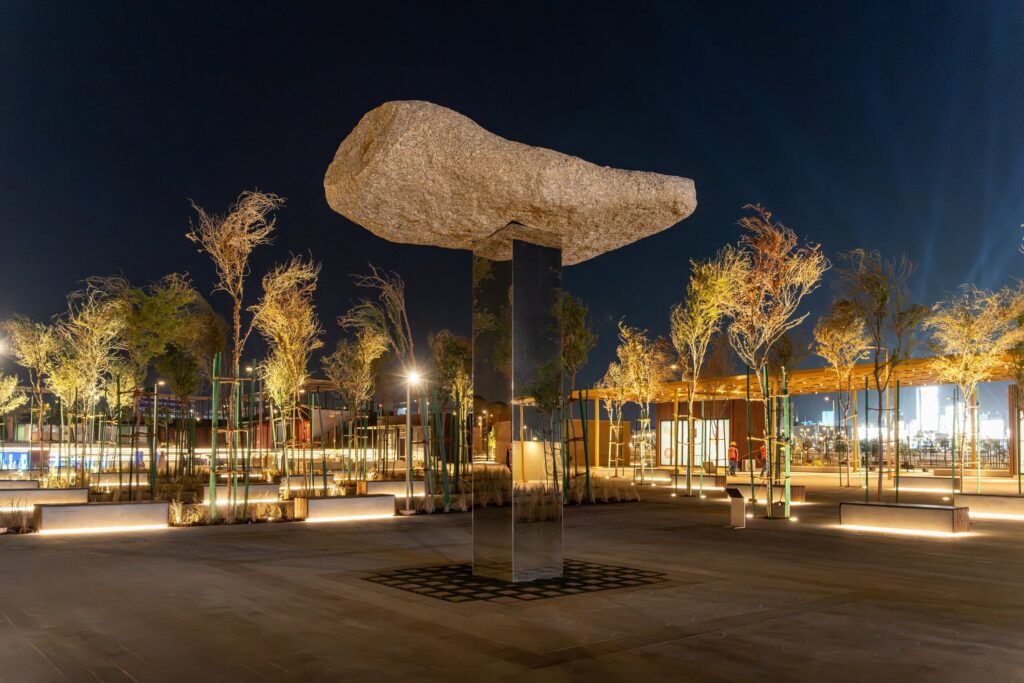
The guide is also designed to bring more consistency to Saudi Arabia’s growing public art scene, giving artists, government bodies and organisations a clearer framework to work from.
Alongside the practicalities of commissioning, installing and caring for artworks, it also looks at their wider cultural value, from protecting artists’ rights to preserving important pieces as part of a city’s evolving heritage.
That shift in thinking is significant. When public art is treated as part of a place’s identity rather than simply something decorative, there is much more room for work that feels genuinely connected to its surroundings. Site-specific pieces can respond to the architecture, landscape, history and communities around them, while giving Saudi artists a greater role in shaping the visual character of the Kingdom.
It comes at an interesting moment for Saudi Arabia’s creative scene. As cultural development continues under Saudi Vision 2030, streets, plazas and public spaces across the country are increasingly becoming destinations in their own right, hosting art, events and experiences that encourage people to spend more time in and engage more closely with their surroundings.
Both versions of the guide are available through the Visual Arts Commission, offering a closer look at the thinking and standards likely to influence the next wave of public art across Saudi Arabia.
Riyadh Public Art
The shift in public art and its importance is already visible across Riyadh. The capital’s permanent public art collection is steadily becoming part of the everyday cityscape.
Earlier this year, led by the Royal Commission for Riyadh City, Riyadh Art had 75 permanent artworks installed across the capital. Another 115 are planned through 2026. The collection showcases works by 100 international artists from 47 countries along with 35 Saudi artists. It includes everything from sculptures to large-scale urban interventions across streets, neighbourhoods, cultural sites, and major roads.
Some prominent artworks include Alexander Calder’s ‘Janey Waney’, a monumental sculpture exploring movement and balance, and Giuseppe Penone’s ‘In the Balance’ at the King Abdulaziz Historical Centre.
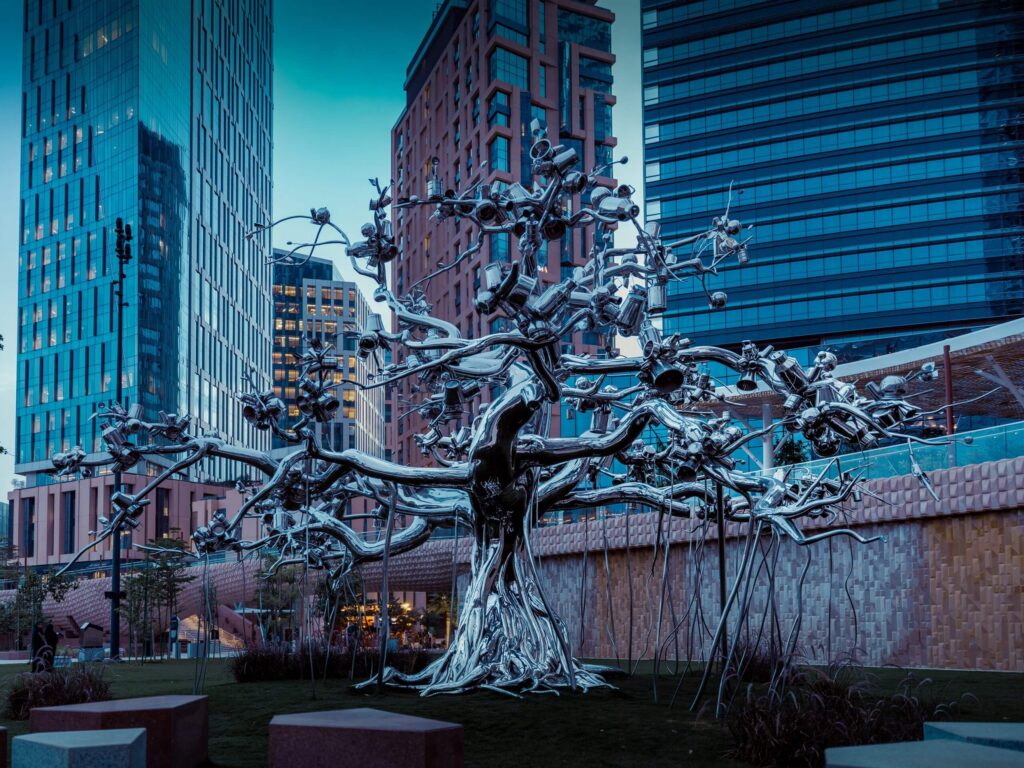
At King Abdullah Financial District, Subodh Gupta’s ‘Family Tree’ explores memory and shared experiences through everyday ordinary objects, while Zaman Jassim’s ‘Golden Dune’ brings a sculptural interpretation of movement to a major city intersection.
The permanent public art collection also features several of Mohammed Al-Saleem’s geometric sculptures, created in the 1980s and recently restored by Riyadh Art. They are set to be permanently installed across the capital throughout the year.
With more works planned, Riyadh’s public art landscape is set to become even harder to miss. For residents, that means the journey through the city increasingly comes with unexpected encounters with art, whether crossing a bridge, driving along a major road or simply walking through a neighbourhood.
Explore The Riyadh Atlas for local guides, hidden attractions, cultural experiences, and the best places to visit across Saudi Arabia’s vibrant capital.