


Some historic villages are remembered because of kings, battles, or ancient trade routes. Al Kharfi Village is remembered because of bees. At first glance, it looks like any other abandoned mountain village.
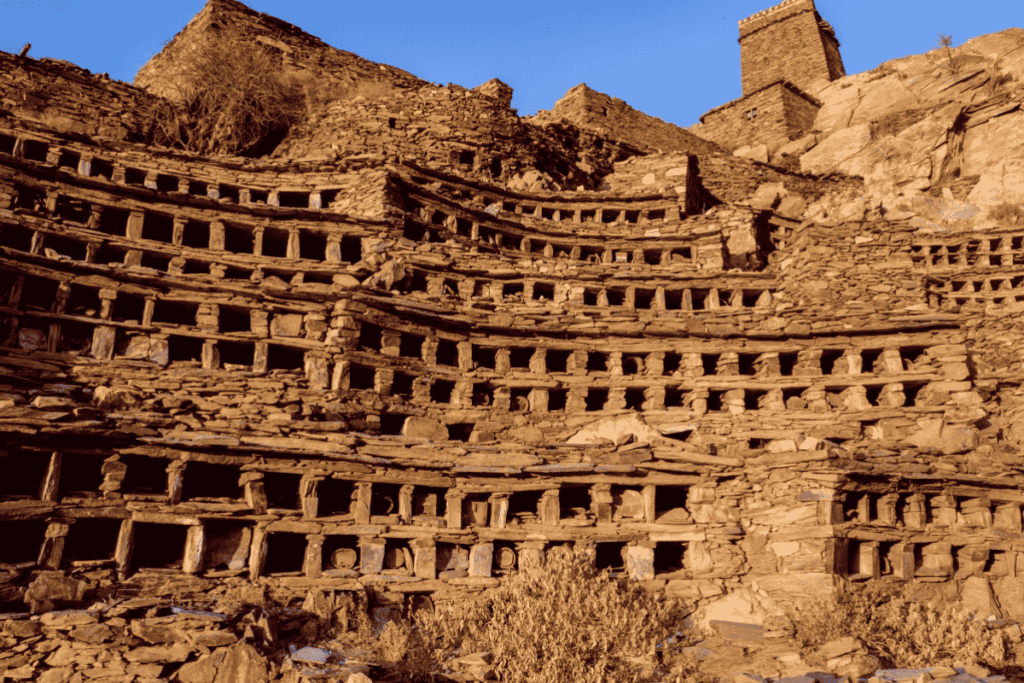
Stone buildings climb the hillside, narrow paths weave between them, and everything feels remarkably quiet. Then the tiny openings in the walls start to stand out. They are too small to be windows and too carefully placed to be decorative.
They are beehives. That changes the way the whole village is seen. Al Kharfi Village was never simply a place where beekeepers lived. It was built around beekeeping. Once that becomes clear, every wall, every building, and every pathway starts telling a different story.
A Community Built Around Honey
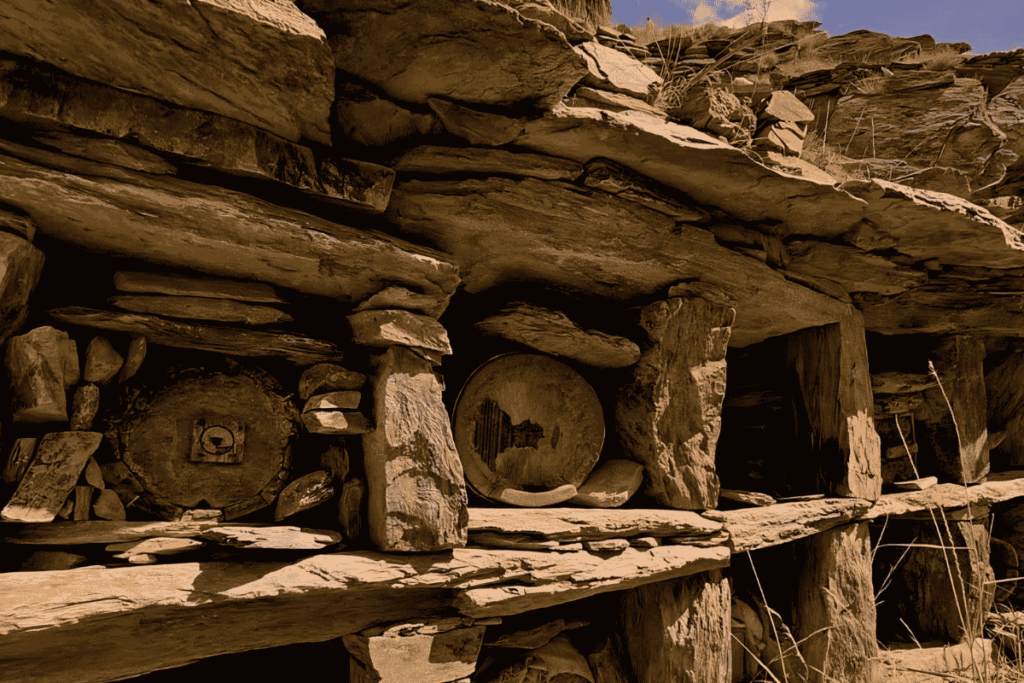
For generations, honey was not just something people produced here. It was a way of life. Instead of keeping beehives separate from the village, they became part of it. Hundreds of hives were built directly into the stone buildings, allowing bees to move freely while the honey remained protected inside carefully constructed chambers.
It is thought that more than a thousand hives once formed part of the village. Looking at the buildings today, it is difficult to imagine the amount of knowledge and patience needed to care for so many colonies.
It also does not take much imagination to picture the village during its busiest years. Bees are moving constantly between the hives. People tending them throughout the day. Families whose livelihoods depended almost entirely on honey. Suddenly the village no longer feels abandoned. It feels lived in.
Architecture With a Job to Do
The longer spent walking around Al Kharfi Village, the more obvious one thing becomes. Nothing here was built by accident. The stone buildings provided shelter, but they also supported the beekeeping industry that allowed the community to survive.
Homes and hives existed side by side because that simply made sense for the people who lived here. Built into the Sarawat Mountains, the village worked with the landscape rather than trying to change it. The beehives were never an afterthought.
They were part of the original design, showing just how closely everyday life and work were connected. It is a reminder that the most interesting historic buildings are often the ones that solved ordinary problems in clever ways.
Why the Village Fell Silent
Like many traditional settlements, Al Kharfi changed as life changed around it. Water became harder to access, people gradually moved to places with better infrastructure, and daily life shifted elsewhere. Little by little, the village was left behind.
The beekeeping tradition continued in other parts of Saudi Arabia, but Al Kharfi became something different. Instead of being a working village, it became a snapshot of a way of life that had almost disappeared. Today, the stone buildings still stand quietly on the mountainside, preserving that story.
Why It Is Worth Visiting
It would be easy to arrive expecting little more than another abandoned village. The story changes everything. Once the purpose of the tiny openings becomes clear, the buildings stop looking like ruins and start looking like evidence of an idea that worked for generations. Every wall suddenly has a purpose.
There are no grand palaces or famous landmarks here. That is exactly what makes Al Kharfi memorable. It tells the story of ordinary people who understood the landscape around them and built an entire community around it. It is the kind of place that stays in the mind long after the visit is over, not because it is the biggest or the most impressive historic site in Saudi Arabia, but because it is unlike anywhere else.
A Village Unlike Any Other
Not every historic place changes the way history is understood. Al Kharfi does. It proves that some of the most remarkable stories are not always about rulers or battles. Sometimes they are about ordinary communities solving everyday problems in ways that still feel astonishing centuries later.
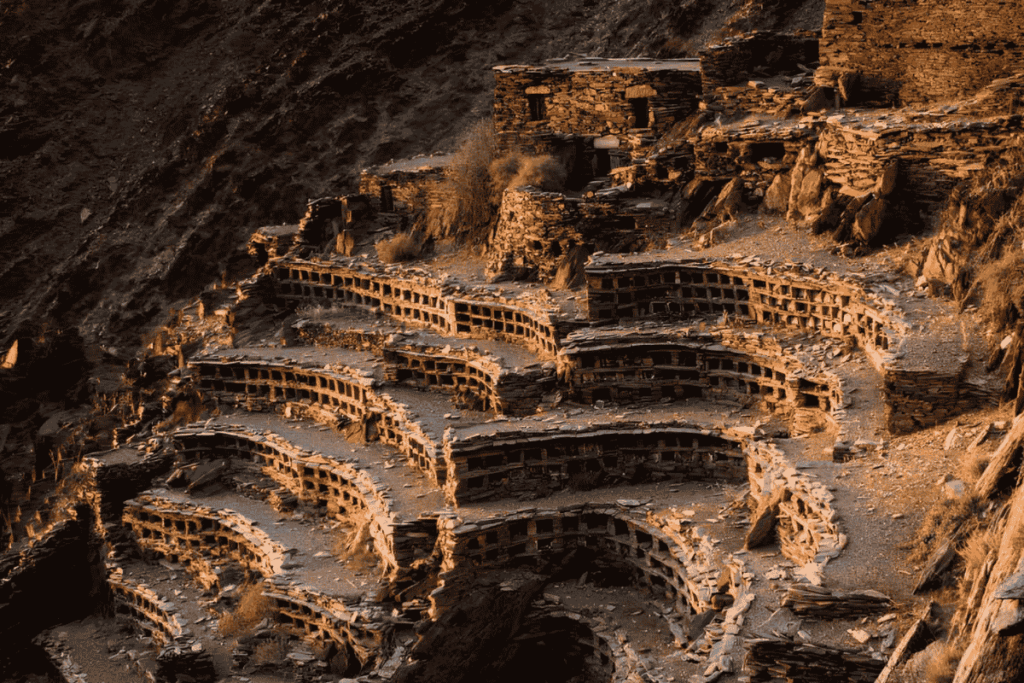
The stone walls are still there. The tiny beehive openings are still visible. They continue to tell the story of a village where people built their lives around bees, creating one of the most unusual historic settlements in Saudi Arabia.
Discover more hidden villages, cultural landmarks, and unforgettable travel experiences across Saudi Arabia with The Riyadh Atlas.