


Riyadh architecture is one of the easiest ways to understand the city, although one of the easiest mistakes to make in Riyadh is looking at the skyline without really seeing it. At first glance, the city feels defined by glass towers, wide boulevards and ambitious new developments.
Spend a little longer exploring, though, and a different story starts to unfold. Traditional mudbrick neighbourhoods sit only a short drive from some of the Middle East’s most recognisable skyscrapers, while carefully restored heritage districts showcase the rich architecture in Riyadh that looks firmly towards the future.
That is what makes Riyadh so interesting. One of the easiest ways to understand the city is through its buildings. Traditional architecture shows how people adapted to life in the desert.
Twentieth-century landmarks reflect a capital growing at an extraordinary pace, while today’s skyline reveals a city that is still changing. Once those different layers become visible, Riyadh starts to feel very different.
Explore Riyadh’s Most Iconic Architectural Landmarks
At-Turaif Historic District
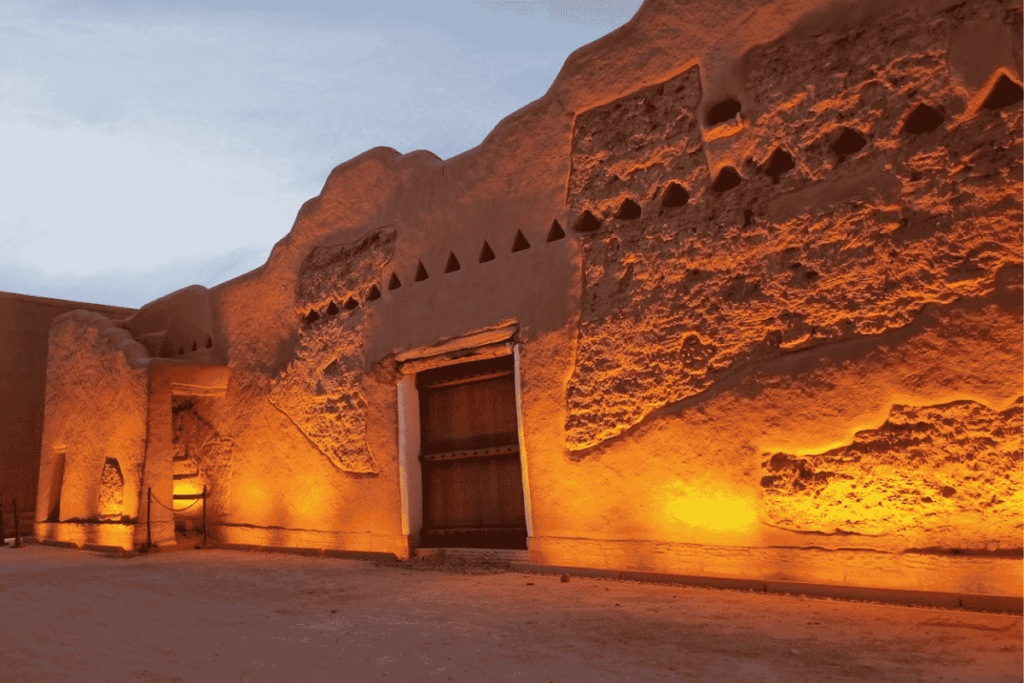
The best place to begin is also the oldest. The first thing that stands out at At-Turaif is that nothing about the architecture feels accidental. The thick mudbrick walls, narrow alleyways, and inward-facing courtyards were all designed for a reason. They kept homes cooler during the intense desert heat, created privacy for families, and made everyday life in the desert far more comfortable.
It is one of those places where putting the camera away for a few minutes actually makes the visit better. Slow down, wander through the streets and the details begin to appear everywhere. The carved wooden doors, the textures of the mud-brick walls, and the way the buildings seem to grow naturally from the landscape all start telling their own story.
As the seat of the First Saudi State, At-Turaif carries enormous historical importance, but its architecture is just as impressive. It explains not only where Riyadh’s story began, but also how people lived here long before glass towers became part of the skyline.
Murabba Historical Palace
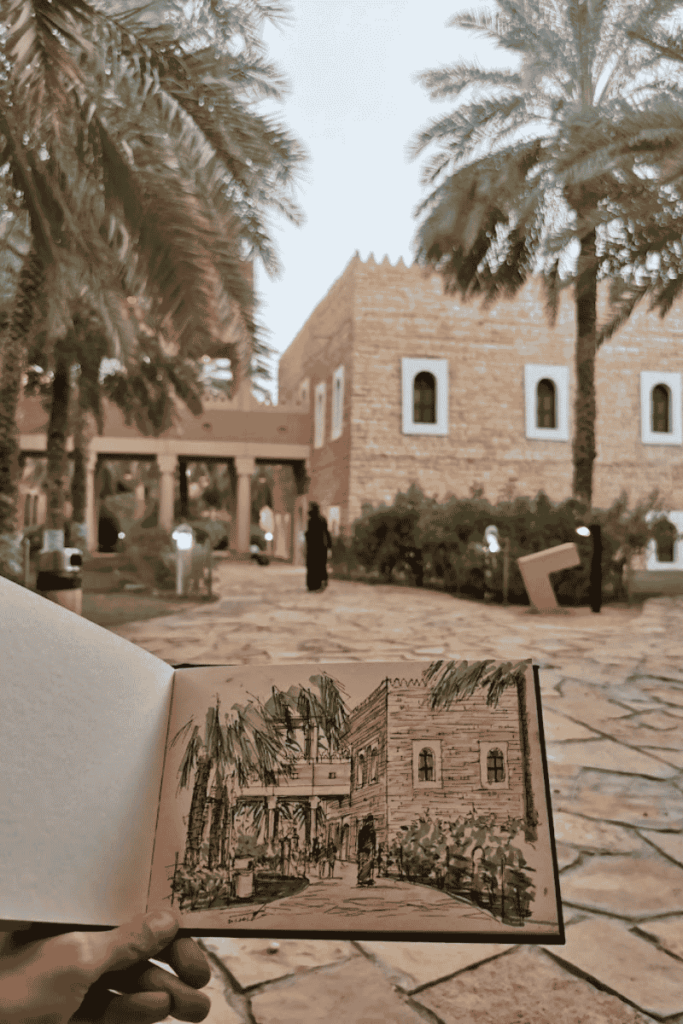
Murabba Historical Palace tells the story of a city that was beginning to outgrow itself. Although the palace follows many of the principles of traditional Najdi architecture, everything feels a little bigger.
Built as the residence of King Abdulaziz, it reflects a period when Riyadh was expanding beyond its original walls while still holding onto the building traditions that had shaped the city for generations.
Standing in the palace grounds today, modern Riyadh rises in almost every direction. The contrast is impossible to miss. It quickly becomes clear just how much the city has grown within a relatively short period of time, and Murabba almost feels like standing between two different versions of Riyadh. Rather than marking a break from the past, the palace shows how traditional architecture evolved alongside a rapidly growing capital.
Al Faisaliah Tower
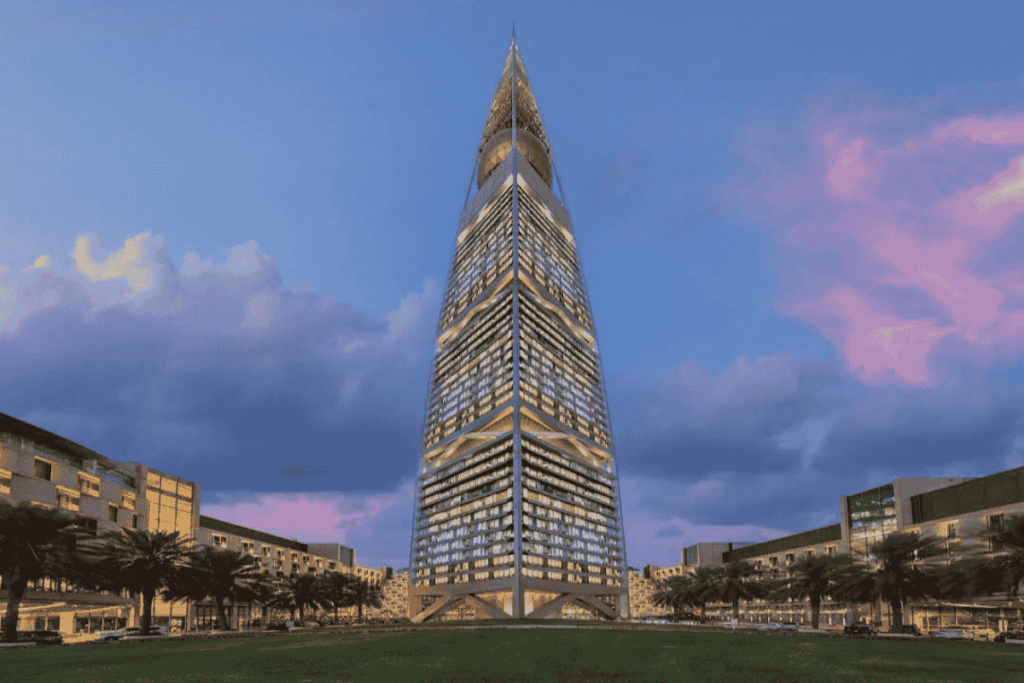
If At-Turaif explains where Riyadh began, Al Faisaliah Tower marks the moment the city started looking upwards. When it opened in 2000, its sleek glass exterior and distinctive golden sphere completely changed Riyadh’s skyline.
More than two decades later, it still catches the eye. Part of that is its design, but part of it is how confidently it contrasts with the city’s older architecture. Clean lines replace textured mudbrick, steel replaces timber, and reflective glass represents a completely different chapter in Riyadh’s development. Yet somehow it still feels like it belongs.
It is impossible to miss, but it is worth spending a little longer looking at why the building became so important. Al Faisaliah was never simply another skyscraper. It became one of the first buildings to symbolise a modern, outward-looking Riyadh, and today it remains one of the city’s most recognisable landmarks.
King Abdullah Petroleum Studies and Research Center (KAPSARC)
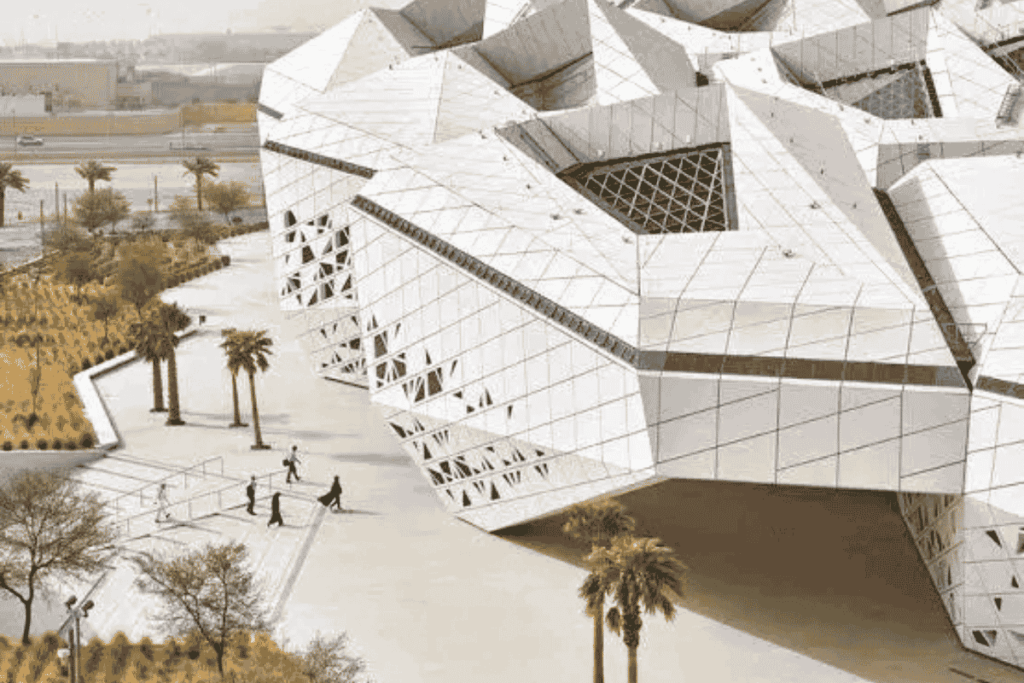
If Al Faisaliah marked the beginning of modern Riyadh, KAPSARC shows just how far the city’s architecture has come. At first glance, the building almost looks like a collection of giant honeycomb shapes fitted together.
Walk around it, though, and it never quite looks the same twice. Every angle reveals something different, which is part of what makes it so fascinating to explore.
Designed by the late Zaha Hadid, KAPSARC is one of those buildings where the architecture is doing far more than making a visual statement. The design has been carefully planned to reduce heat, maximise shade and create comfortable public spaces despite Riyadh’s climate. It is a thoroughly modern building, but the idea behind it is surprisingly familiar.
Traditional Najdi architecture was designed to work with the environment rather than against it. KAPSARC follows exactly the same principle using completely different materials and technology. It is a reminder that although Riyadh’s skyline has changed dramatically, some of the city’s best architectural ideas have never really disappeared.
Kingdom Centre
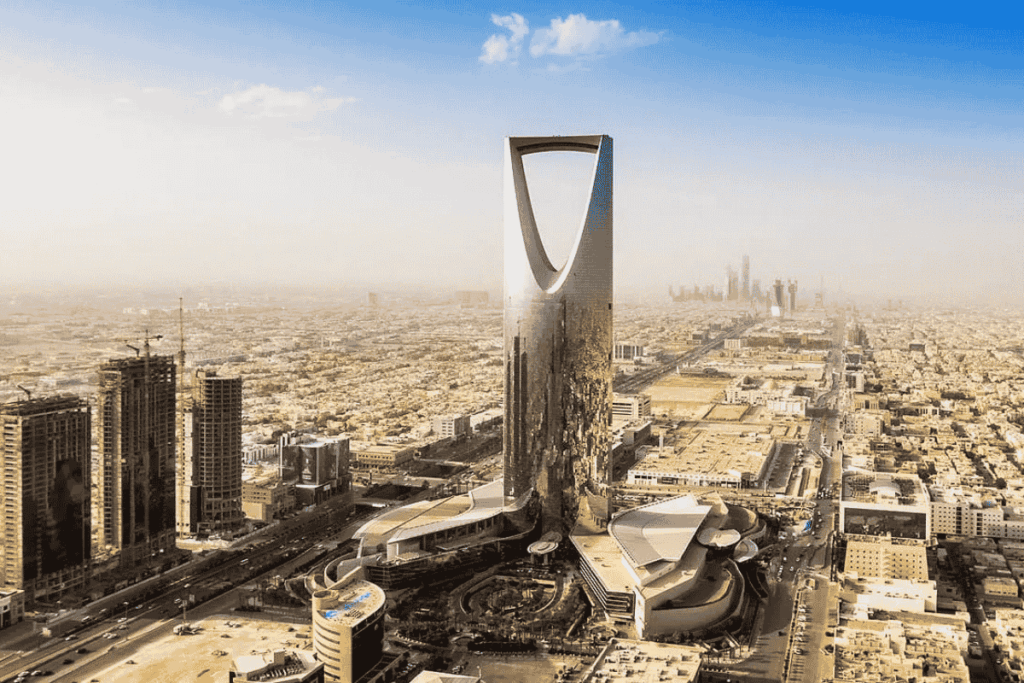
Some buildings become landmarks because they are the tallest. Others become landmarks because they shape the identity of a city. Kingdom Centre belongs firmly in the second category.
Its distinctive opening at the top has made it one of Riyadh’s most recognisable buildings, but what makes it memorable is actually its simplicity. There is something refreshing about how simple it is.
The clean lines and instantly recognisable silhouette are enough to make it stand out against the skyline, even among much newer developments.
Visiting the Sky Bridge also puts everything else into perspective. Looking across Riyadh from above, the different stages of the city’s development become surprisingly easy to spot.
Historic districts sit alongside expanding neighbourhoods, while modern business districts stretch towards the horizon. It becomes clear that Riyadh has never stood still. It has simply continued growing around the buildings that shaped each chapter of its history.
Diriyah
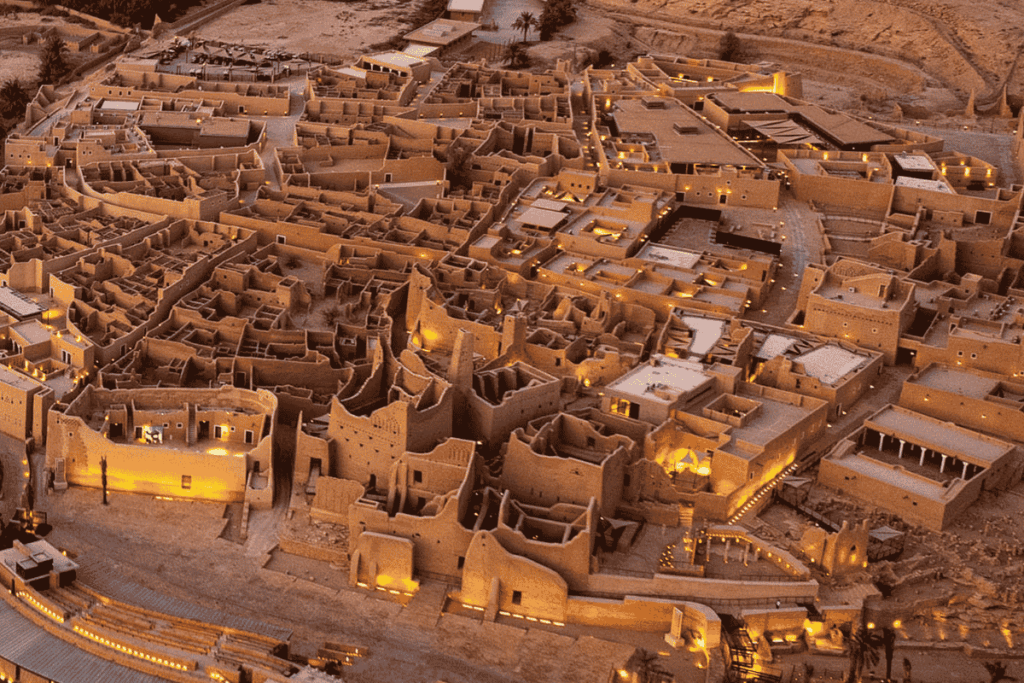
Architecture is not always about creating something new. Sometimes it is about making sure the past is not lost. That is exactly what makes the wider Diriyah restoration project so impressive.
Restoring traditional Najdi architecture is about much more than repairing old buildings. It is about preserving construction methods, craftsmanship and design principles that have shaped this region for centuries.
One of the nicest things about walking through Diriyah today is that it never feels frozen in time. Families wander through the streets in the evening, people meet for dinner, and the historic buildings remain part of everyday life rather than standing behind barriers.
That balance between heritage and everyday life is probably the project’s greatest success. Rather than treating history as something separate from the modern city, Diriyah allows both to exist comfortably alongside one another.
Reading Riyadh Through Its Architecture
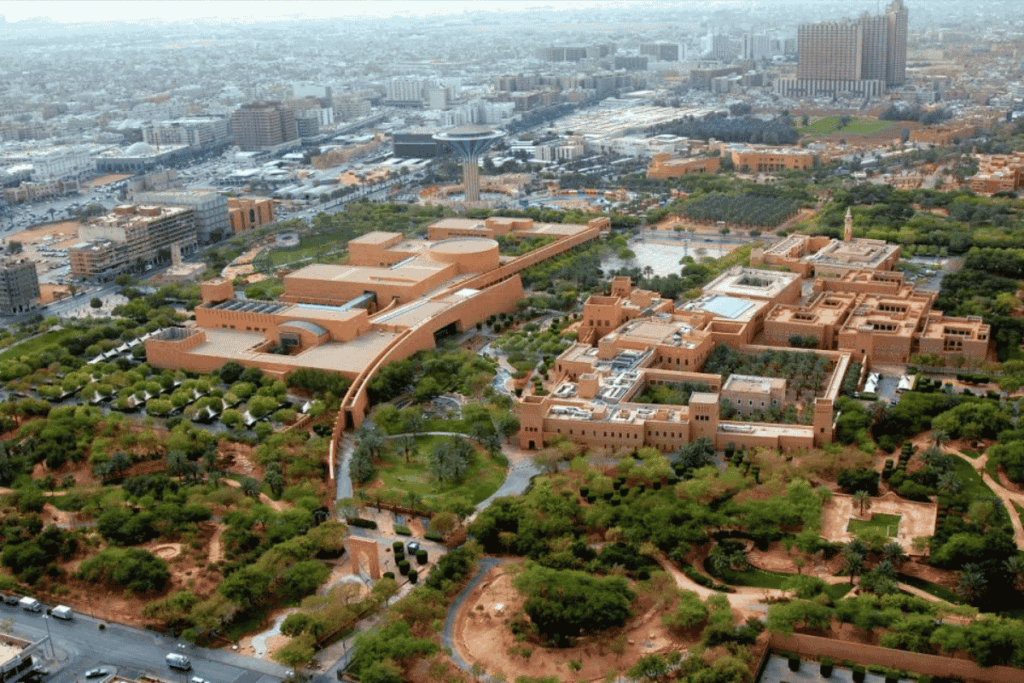
By the end of exploring Riyadh, one thing becomes clear. The city’s architecture is telling the same story as its history. Traditional Najdi buildings explain how people adapted to life in the desert long before modern technology existed.
Murabba reflects a city beginning to expand beyond its original walls. Al Faisaliah and Kingdom Centre capture the confidence of a rapidly modernising capital, while KAPSARC shows that the newest buildings are once again responding to the climate in thoughtful and innovative ways.
Diriyah brings those ideas together by proving that preserving the past and planning for the future do not have to be separate goals. That is why architecture is one of the best ways to understand Riyadh.
Spend enough time exploring Riyadh and it becomes difficult to look at the skyline in quite the same way again. Every building represents a different moment in the city’s story. Together they explain how Riyadh has grown, adapted and continued to reinvent itself without losing sight of where it began.