


The best Saudi restaurants in Riyadh showcase just how diverse the Kingdom’s cuisine really is. Saudi food is far too varied to be reduced to one plate of kabsa. A Najdi lunch built around jareesh, qursan and slow-cooked lamb feels completely different from a Hijazi breakfast of tamees, foul and mutabaq.
Travel further across the Kingdom and the food changes again, shaped by local ingredients, family recipes and the way people have cooked in each region for generations.
Riyadh has restaurants that explore those traditions in very different ways. Some recreate the atmosphere of an old Najdi home, while others bring together dishes from across Saudi Arabia or place familiar recipes in a more contemporary setting. Whether you are trying Saudi food for the first time or already know exactly what you want to order, these are some of the best places to begin.
Best Saudi Restaurants in Riyadh
Najd Village
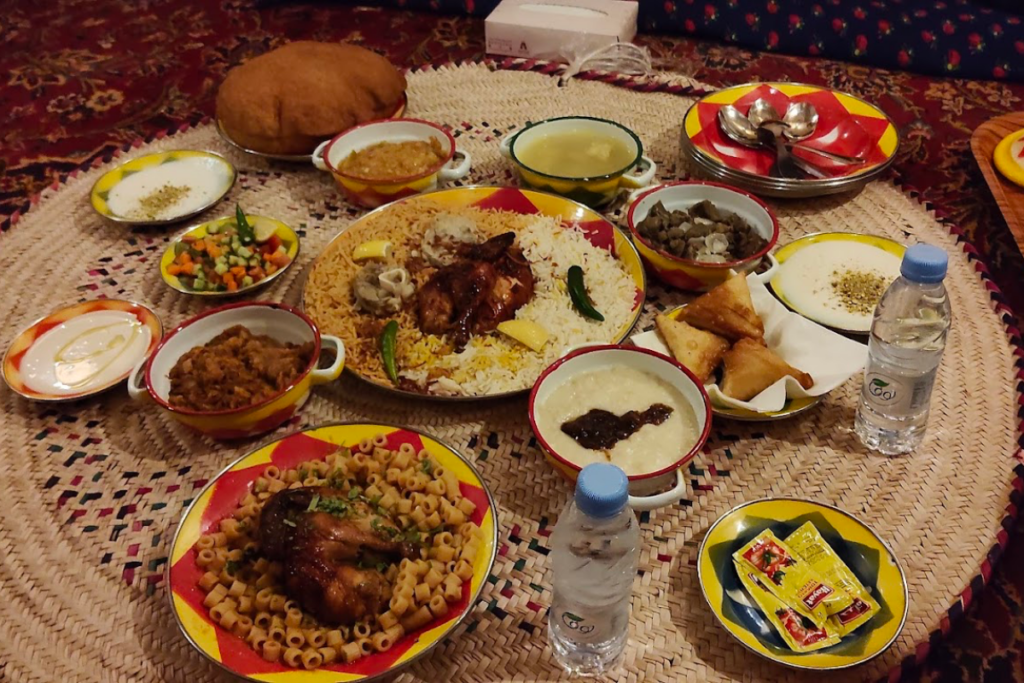
Najd Village is as much about the setting as the food. Its Riyadh branches are designed to resemble traditional Najdi homes, with courtyards, covered terraces and private rooms where guests sit on floor cushions around a shared meal. For anyone new to Saudi cuisine, the surroundings offer an immediate introduction to the way the food has traditionally been served and enjoyed.
The menu goes well beyond kabsa. Jareesh, qursan, matazeez, marqooq and hamees all feature, alongside lamb dishes and traditional desserts such as hanini and aseeda with honey.
The best meals here are usually the ones where several dishes arrive together. Jareesh brings a soft, almost creamy texture, while qursan combines thin bread with vegetables, meat and sauce. Matazeez adds pieces of dough directly to the stew, allowing them to absorb everything around them as they cook.
Larger tables can choose one of the sharing menus, which makes it much easier to try several dishes without ordering half the menu individually. The spread quickly fills the floor or table, with rice, bread, meat and smaller dishes arranged between everyone.
Najd Village received a Michelin Bib Gourmand in the guide’s first Saudi selection, recognising good cooking at an accessible price. It remains one of the easiest places to introduce visiting friends or family to traditional Najdi food. The meal is generous, the setting explains the culture around it and nobody is expected to approach dinner as one carefully separated plate per person.
Fi Glbak
Fi Glbak looks beyond one part of the Kingdom and draws inspiration from several Saudi regions. The restaurant was created by Saudi chef and food creator Hisham Baeshen, whose work has long focused on recording traditional recipes and sharing the stories behind them. His first restaurant brings that research into a menu shaped by the food of five regions, with a small number of dishes from elsewhere in the Middle East appearing too.
That wider view gives the meal plenty of range. Saudi cuisine changes considerably from the centre of the country to the coast, the mountains and the south, and Fi Glbak allows diners to move between some of those flavours during one visit.
The food feels closely connected to the people and places behind it. These are not simply well-known Saudi dishes gathered together because diners will recognise their names. Many of the recipes come from years spent cooking, travelling and learning how families prepare food in different parts of the country.
That makes the restaurant particularly interesting when everyone at the table has a different connection to Saudi food. One dish may remind someone of home, while the person beside them may be trying it for the first time.
Fi Glbak has also received a Michelin Bib Gourmand, and one of its desserts was later highlighted among the dishes Michelin inspectors particularly enjoyed in Riyadh.
The best approach is to order across the menu rather than staying entirely with familiar choices. Ask where the dishes come from, try something from a region you know little about and let the meal become a small journey around Saudi Arabia.
Takya
Takya brings Saudi cooking into a contemporary dining room at Bujairi Terrace. Before developing the menu, the team travelled through different parts of the Kingdom to research local ingredients, recipes and cooking traditions. That work remains visible in the food, even when the presentation feels very much at home in modern Riyadh.
Traditional flavours are not hidden or treated as something that needs to be reinvented completely. Instead, familiar dishes are given a little more space and detail while keeping their Saudi identity clear.
The location adds a great deal to the evening. Takya looks across towards historic At-Turaif, and the view becomes particularly striking after dark when Diriyah is illuminated across the wadi.
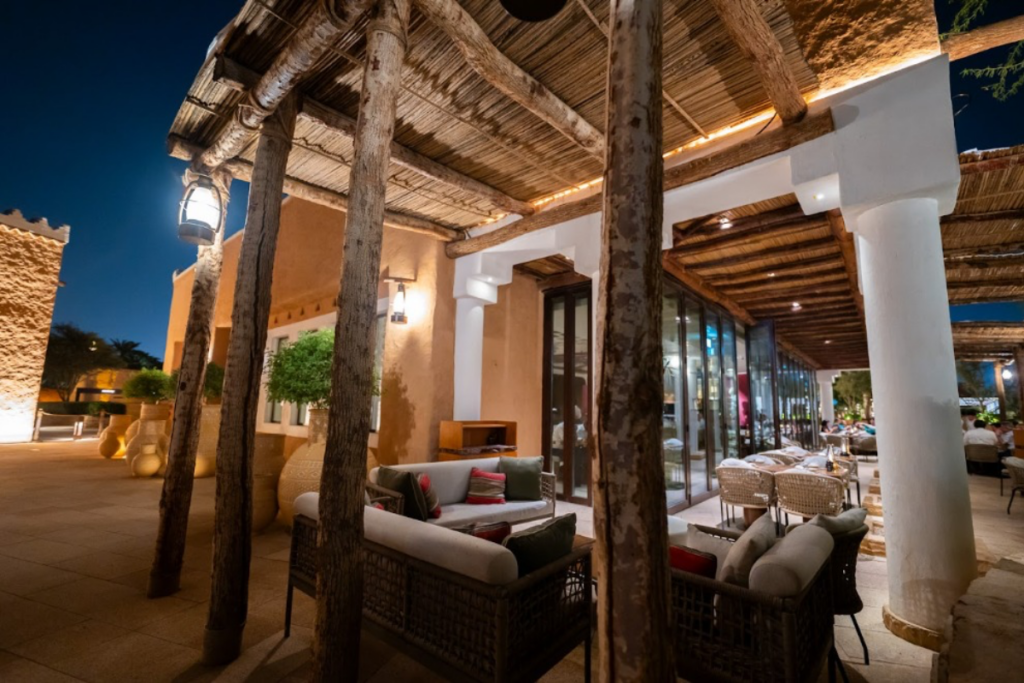
It is the kind of restaurant that works well when the plan calls for more than a quick meal. Dinner can be combined with time at Bujairi Terrace, a walk through the surrounding area or an evening exploring Diriyah.
The menu is also approachable for diners who may not recognise every traditional dish. Enough explanation is provided to make unfamiliar ingredients feel less intimidating, while people who already know Saudi food will still find plenty that feels rooted in the cooking they grew up with.
Takya shows how naturally Saudi food can sit within a contemporary restaurant without losing the traditions that shaped it. Booking ahead is sensible, particularly during the cooler months when Bujairi Terrace becomes one of the busiest places in the city.
Tameesa
Tameesa gives Saudi breakfast the attention it deserves. Located in Alyasmin, the restaurant opens early and serves a menu influenced by Hijazi cooking. The meal is built around dishes placed in the middle of the table rather than one small breakfast ordered separately by each person.
Foul, moutabbal and mutabaq are among the main reasons to visit, all served with freshly baked tamees bread. The bread arrives hot, disappears almost immediately and usually needs to be replaced before the rest of the food is finished.
Mutabaq is filled, folded and cooked until crisp on the outside. Foul offers a slower, more comforting start, especially once it is eaten with pieces of warm bread and whatever else has gathered around the table.
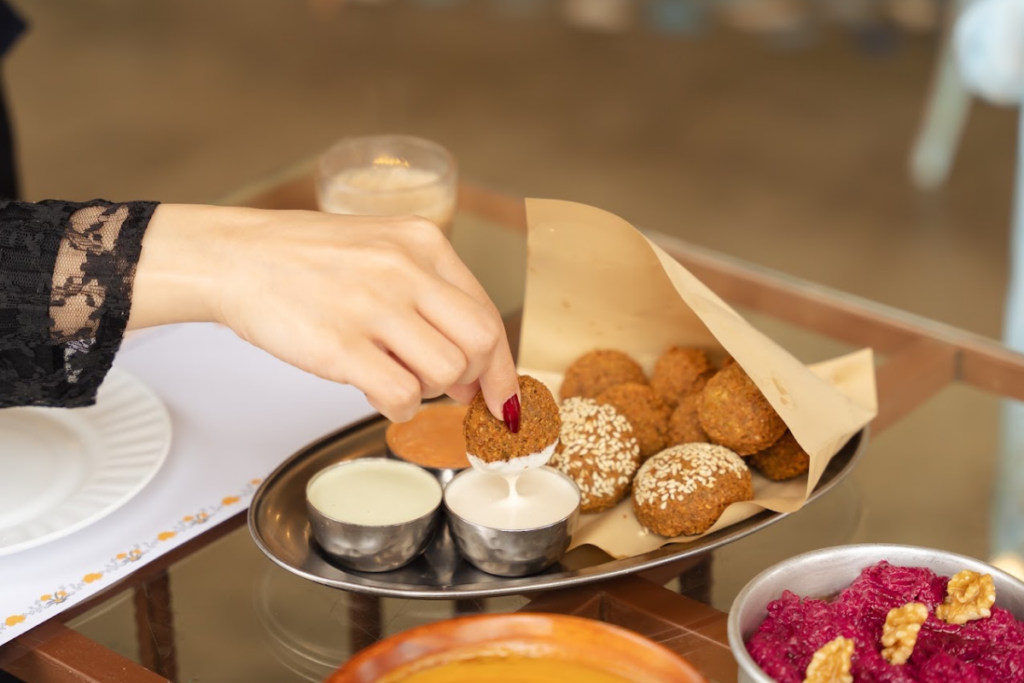
This is rarely the kind of breakfast where someone orders one coffee and leaves 20 minutes later. The menu encourages sharing, and the order usually expands once everyone notices what has arrived at another table.
Tameesa received a Michelin Bib Gourmand, with the guide recognising it as far more than a standard breakfast stop. That description feels accurate. The restaurant takes dishes that are already part of everyday Saudi life and gives people a comfortable place to enjoy them without trying to make breakfast look more complicated than it needs to be.
It is a particularly good choice for families, groups of friends or visitors unsure where to begin with a Saudi breakfast. Order several dishes, keep the bread coming and avoid making an early lunch reservation. You probably will not need it.
Aseeb
Aseeb is built around the food and hospitality of Najd. The restaurants use traditional architectural details, majlis-style seating and private family spaces to create an atmosphere that feels closely connected to the region. Saudi coffee and dates begin the experience before the table moves towards jareesh, qursan, rice dishes and slow-cooked meat.
Jareesh is one of the dishes most closely associated with the restaurant. Crushed wheat is cooked slowly until soft and creamy, creating something deeply comforting without relying on a long list of ingredients.
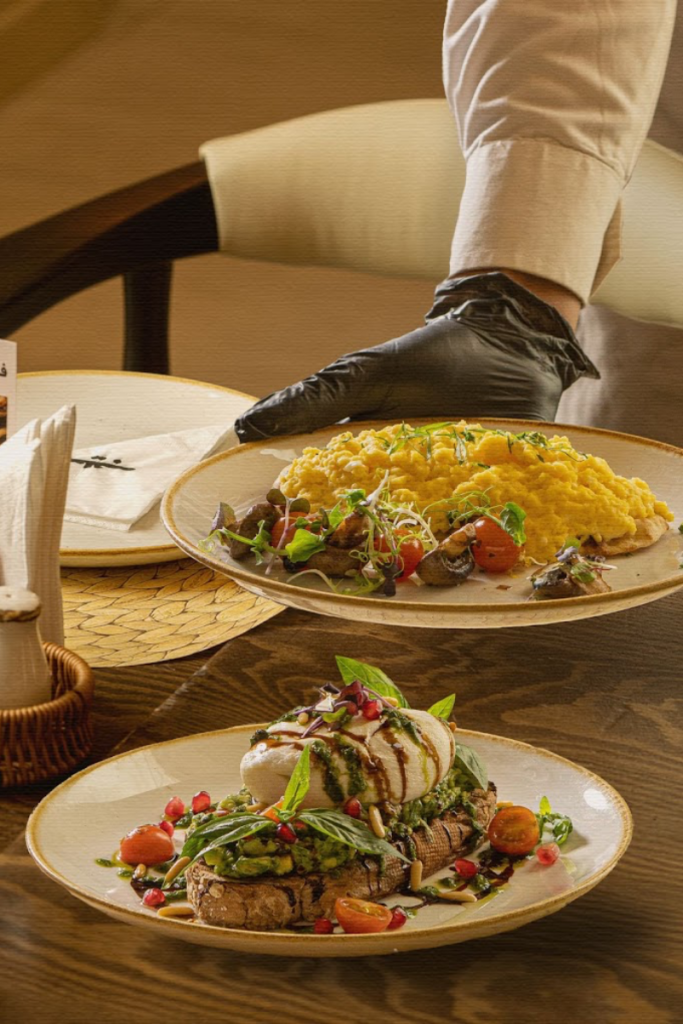
Qursan brings together thin bread, vegetables, meat and sauce. The bread absorbs the flavours around it, giving the dish far more texture than its simple appearance might suggest.
Other menu choices include lamb, spiced rice and traditional breakfast dishes. Selected branches also serve minced camel meat with eggs and Aseeb spices, accompanied by tamees bread.
Aseeb has locations in Alyasmin and Zallal Diriyah. The Diriyah branch places the food within a newer setting, but the meal still centres on Najdi cooking and the idea of everyone gathering around one table.
The restaurant works especially well for family meals and larger groups. Dishes are shared, coffee continues moving between guests and nobody is expected to rush through dinner.
Aseeb understands that Saudi hospitality is not something added around the meal. The welcome, the table and the time spent together are all part of the food.
Which Saudi Dishes Should You Try?
A traditional Saudi menu can feel unfamiliar when the names do not immediately explain what will arrive. Kabsa is the most obvious starting point. Spiced rice is served with chicken or lamb and placed in the centre for everyone to share. It is easy to find and difficult not to enjoy, but it should not be the only Saudi dish you try.
Jareesh is made from crushed wheat cooked slowly with onions, spices and sometimes meat. Its soft texture makes it one of the most comforting dishes on a Najdi table.
Qursan combines thin pieces of bread with meat and vegetables, while marqooq uses larger pieces of dough cooked directly inside a rich stew. Matazeez follows a similar idea, with smaller pieces of dough absorbing the sauce as they cook.
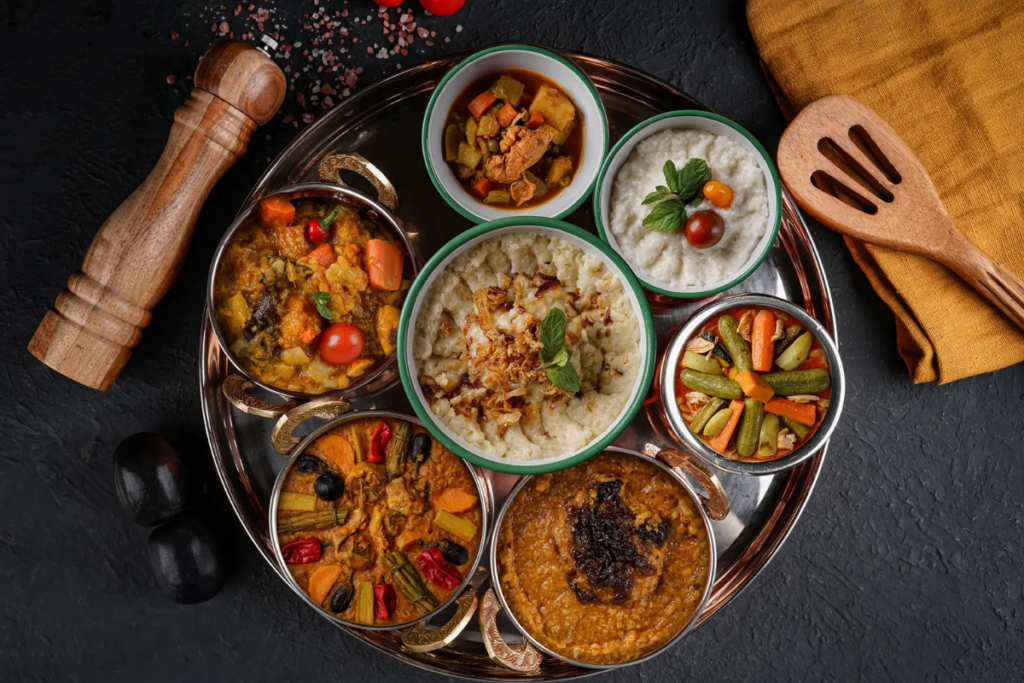
Saleeq comes from the Hijaz and uses rice cooked to a soft, creamy consistency before being served with chicken or meat. Mutabaq is another Hijazi favourite. Thin dough is folded around a filling that may include minced meat, eggs and vegetables, then cooked until the outside becomes crisp.
For breakfast, foul and tamees belong together. The beans are seasoned and eaten with torn pieces of warm bread, often alongside eggs, cheese, lentils or mutabaq.
Dessert may include hanini, made with dates and bread, or aseeda served with honey. Qishd combines dates, flour and butter into something rich enough that a small serving should be plenty, even if the table has other ideas once it arrives.
There is no need to order everything during one meal. Begin with something familiar, add one dish you have never tried and ask the restaurant what best represents the region behind its menu.
Saudi food makes the most sense once several plates are placed together. Rice, wheat, bread, meat, dates and spices may appear again and again, but the way they are cooked changes from one part of the Kingdom to another. That variety is what makes exploring Saudi restaurants in Riyadh so enjoyable.
Follow The Riyadh Atlas for more restaurant guides, local food recommendations, cultural experiences and insider tips to enjoy the very best of Riyadh’s dining scene.